Jaden Zhang
Design Courses Deliverables
University of Toronto Mechanical Engineering
As a mechanical engineering student at the University of Toronto, I experienced instruction in more than just theoretical knowledge - many courses have allowed me to experience professional strategies and best practices.
The development of my professional skills, including collaboration, time/resource management, and technical report writing, accompanied the deliverables from these courses, including documents such as Team Charters, Project Requirements, and Conceptual Design Specification reports.
Key Skills: Technical Report Writing (CDS, PR), Client-Oriented Teamwork, Cost/BOM Management, Full Design Pipeline Process
Robotic Cinematography Assistance
September 2025 - December 2025
Inline with learning Solidworks Computer Assisted Design was a three month long group project to design an affordable robotic cinematography assistance for beginner filmmakers. Current robotic cinematography arms are priced at upwards of $70 000USD, significantly out of budget for cinematographers starting out, and thus our target was to fully design and CAD an affordable alternative, taking into consideration all aspects of manufacturability, dynamics/statics calculations, and effectiveness as a cinematograph aid.
In collaboration with Lauren Chow, Michelle Bilan & Adalric Tai - For MIE243 - Mechanical Engineering Design
- Effective teamwork, with no predetermined team structure, to create a 50+ page polished Design Brief document, outlining and justifying a chosen design and a few alternates, while also describing the research process and scoping of the vague project
- Manual version control of CAD Files using Google Drive to maintain synchronicity and allow effectively collaberation between group members on designing in Solidworks with assemblies of more than 300 componenents
- Part selection (McMaster-Carr) and creation (Solidworks, Solidworks Sheet Metal) to align designs to its main design philosophy: being affordable while still performing useful cinematography camera shots
- Technical drawings of custom CNC parts, custom sheet metal (of 3/8 in. and 7/16 in.), and subassemblies, including labelled Bill of Materials, including fasteners and hardware
- Check-ins with the engineering manager/teaching assistant to present (15 minutes) design progress, including research, scoping, idea generation/selection, and final design iteration
- Assembly/subassembly designing by drafting general layout on whiteboards in group meetings, then assigning the respective CAD task to a member to complete and verify to be possible
- Biweekly team meetings to ensure frequent check-ins and present personal progresses, concerns, and next steps regarding individual tasks, and group discussions on overarching/major team tasks
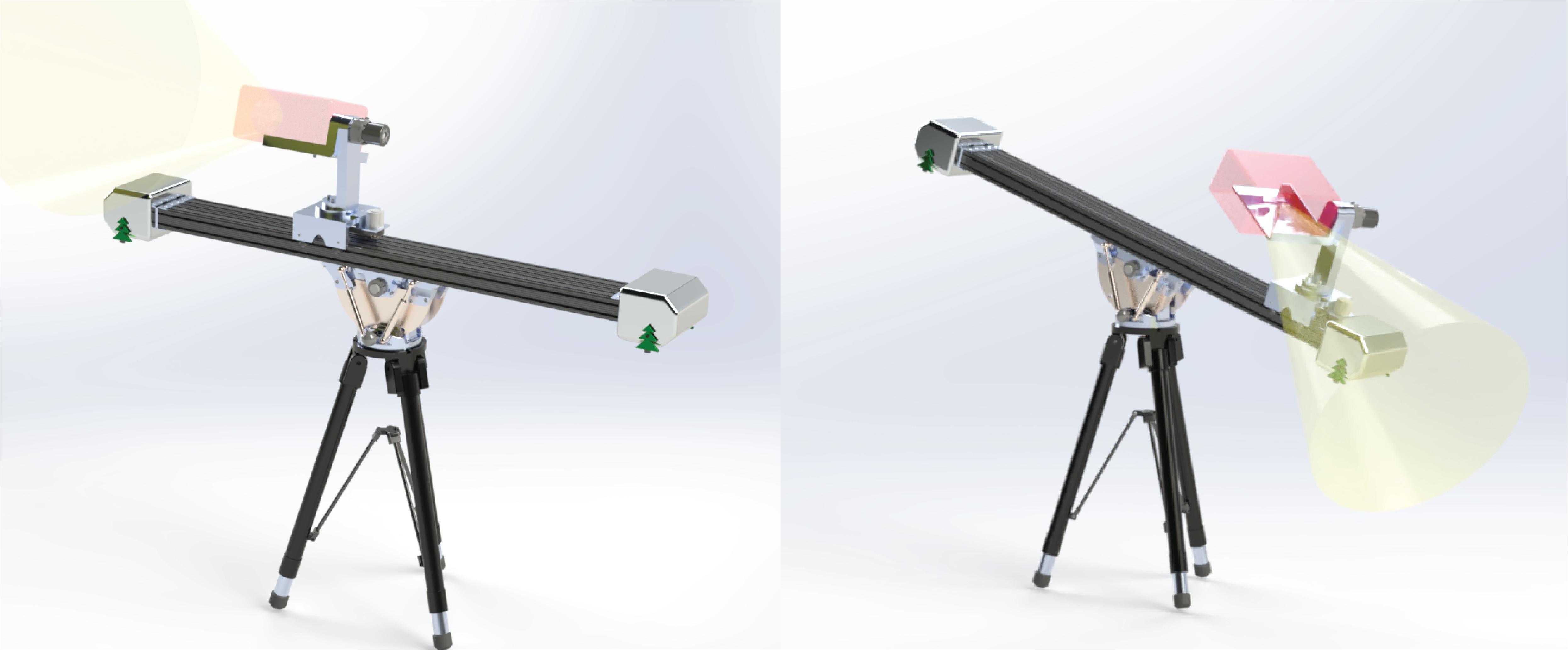
The rendered full CAD of our final design - a Linear Track & Cart design that prioritizes simplicity to reduce costs, done in collaboration. As a part of version/file control, this CAD is designated as Main, and the group should be notified before anything in here is updated.
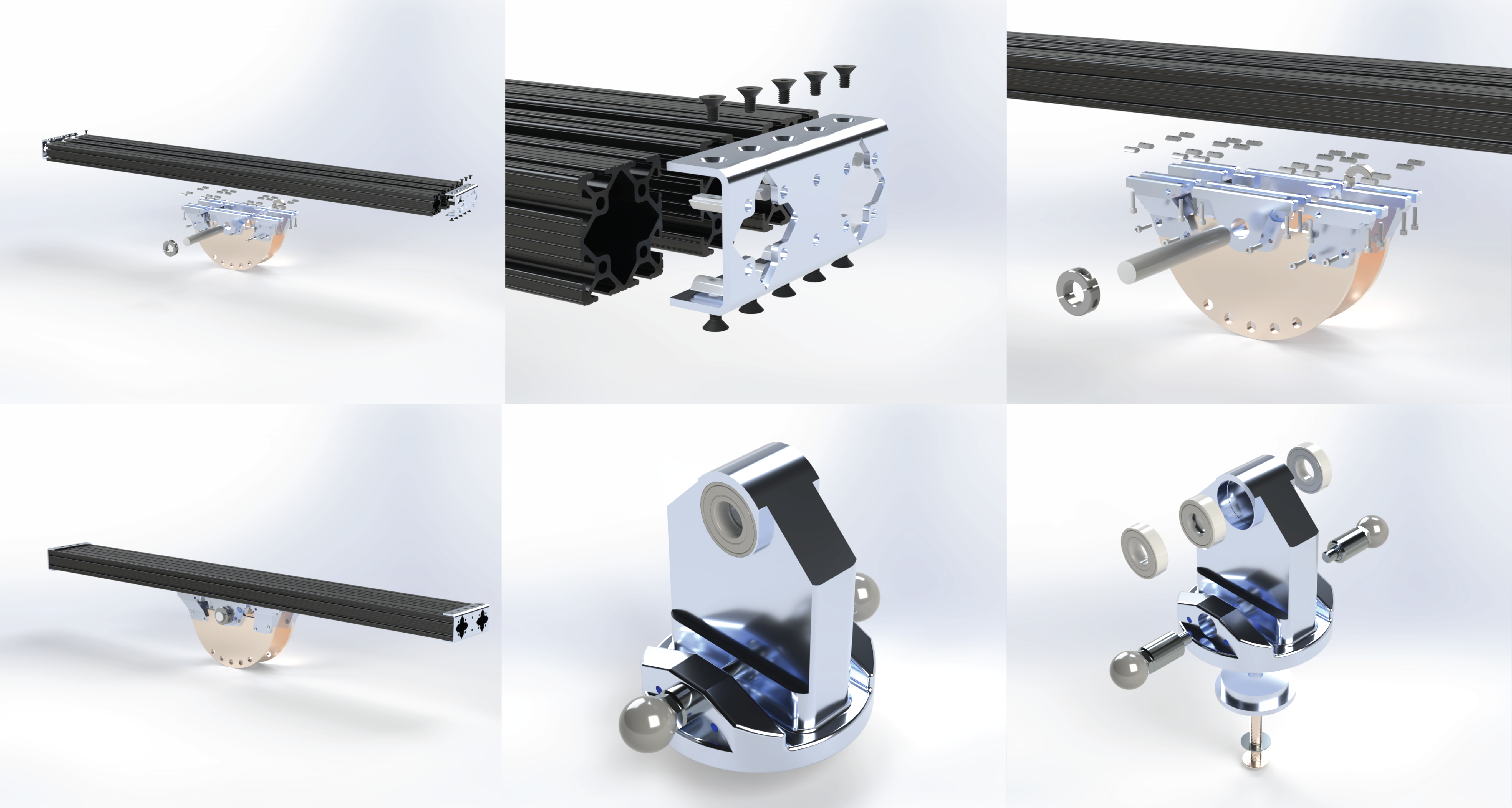
The subassemblies I was responsible for: the Track assembly, and the Pop-pin Assembly (base). Rendered with SW Visualize.
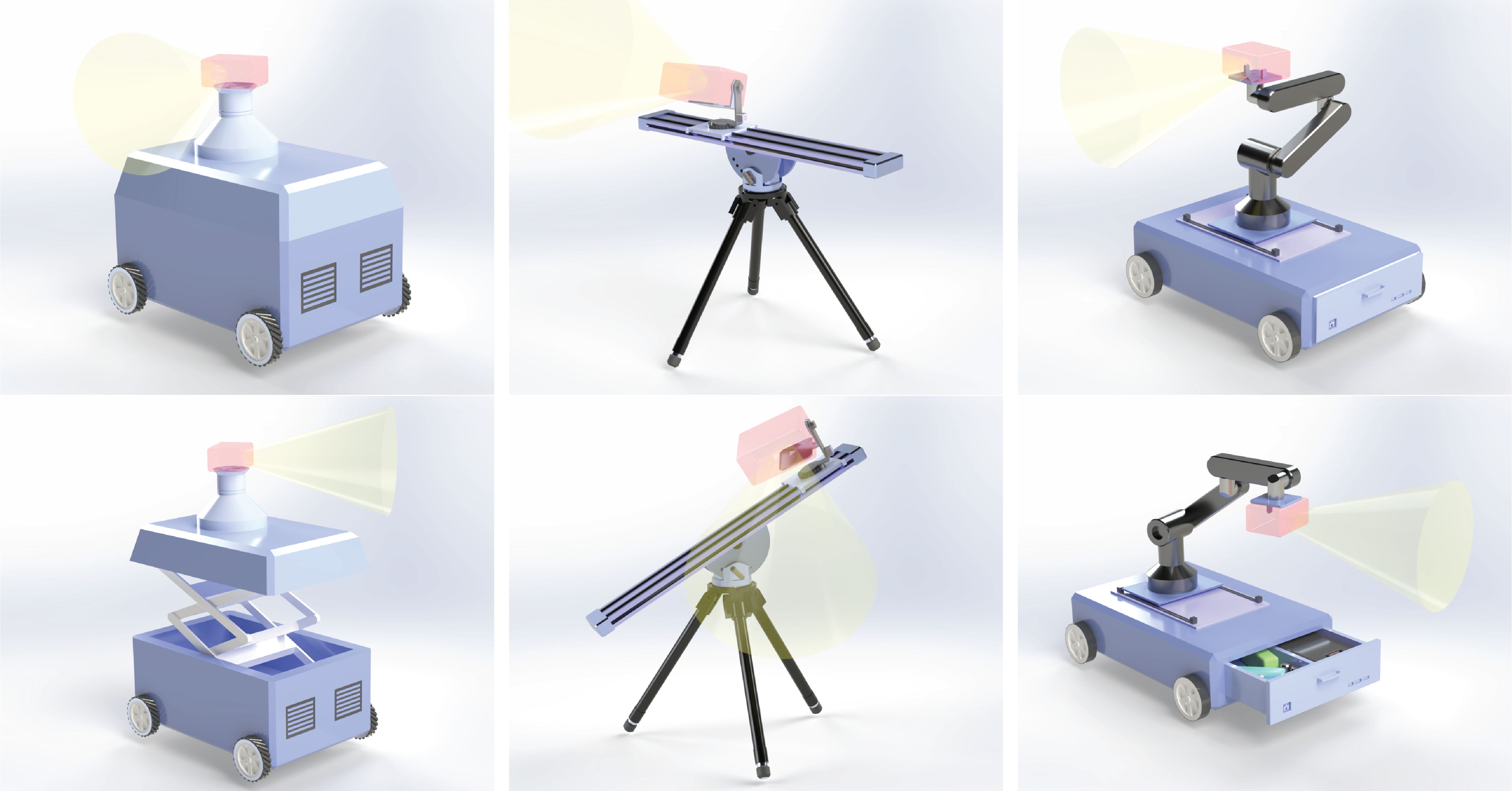
Crayola CAD, made quickly to visualize ideas that were considered but may not have moved on in the idea selection process. All three pictured assemblies were made and fully mated in less than 2 hours each.
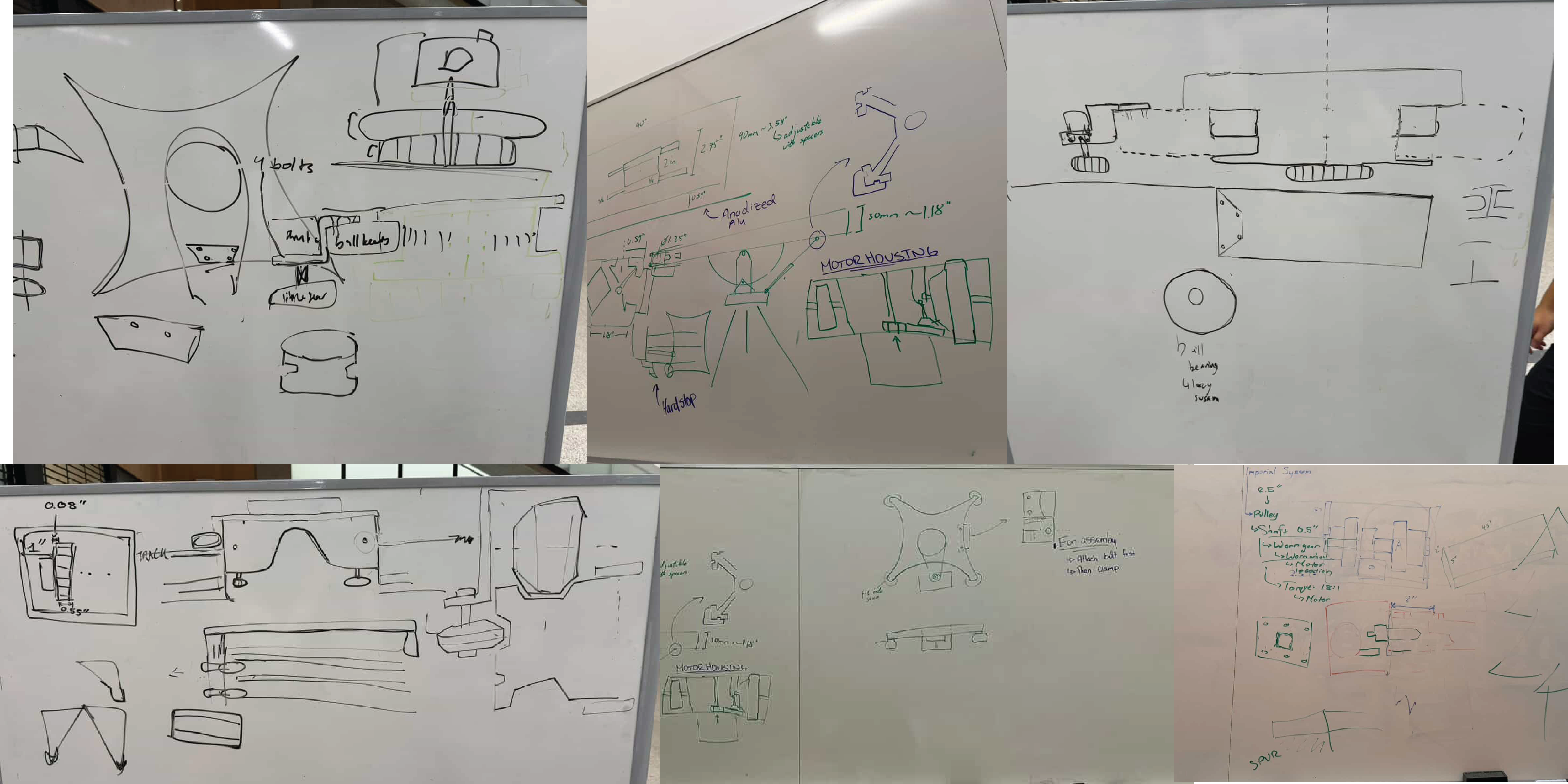
Some brainstorming/layout ideas that emerged during group meetings before assigning specific subassemblies to individuals. Key design decisions such as gearbox type, and interfaces with other subassemblies were decided here, while others like fastner type/size were individually chosen.
Traumatic Brain Injury Assistance Tool
January 2025 - April 2025
A psychology case study was presented to us by a group from St. Lawrence College, and we were given the oppportunity to develop a solution/aid. Micheal, a 47 year old male suffered a traumatic brain injury due to a motorcycle incident. As a direct result, his ability to complete daily tasks and operate independently has been diminished, leading to him lashing out in anger towards his family. Our task was to develop a tool to assist in Micheal's gradual recovery and that helps address his outbursts.
With weekly check-ins from out engineering manager and communications instructor, we conducted meetings twice a week to effectively develop three targeted designs that fulfill the project requirements, producing our final Conceptual Design Specifications in a 60 page document.
In collaboration with Adalric Tai, Nadira Barnes, Michelle Bilan, Sean Issel Moises & Gary Geng - For APS112 - Engineering Strategies and Practice II
- Acted as Team Leader to organize the group, resolve conflicts, and facilitate interpersonal compatibility, including addressing teammates absent for extended periods, and catching them up when returned, as well as effetively communicating with our (virtual) client group
- Led discussions during weekly (2-3 times) team meetings to move the project forward in progress, as well as assigning tasks based on personal strengths and interests
- Clear and technical language to formally document design choices and justification for effective presentation and idea transfer
- Led inter-team meetings with behavioral psychology students at St. lawrence College to present our ideas and reports, while also considering their feedback and recommendations to create a more rounded and informed final design
- Utilized Figma Design to create demo user interfaces for conceptual designs to visualize and more effectively present our final output
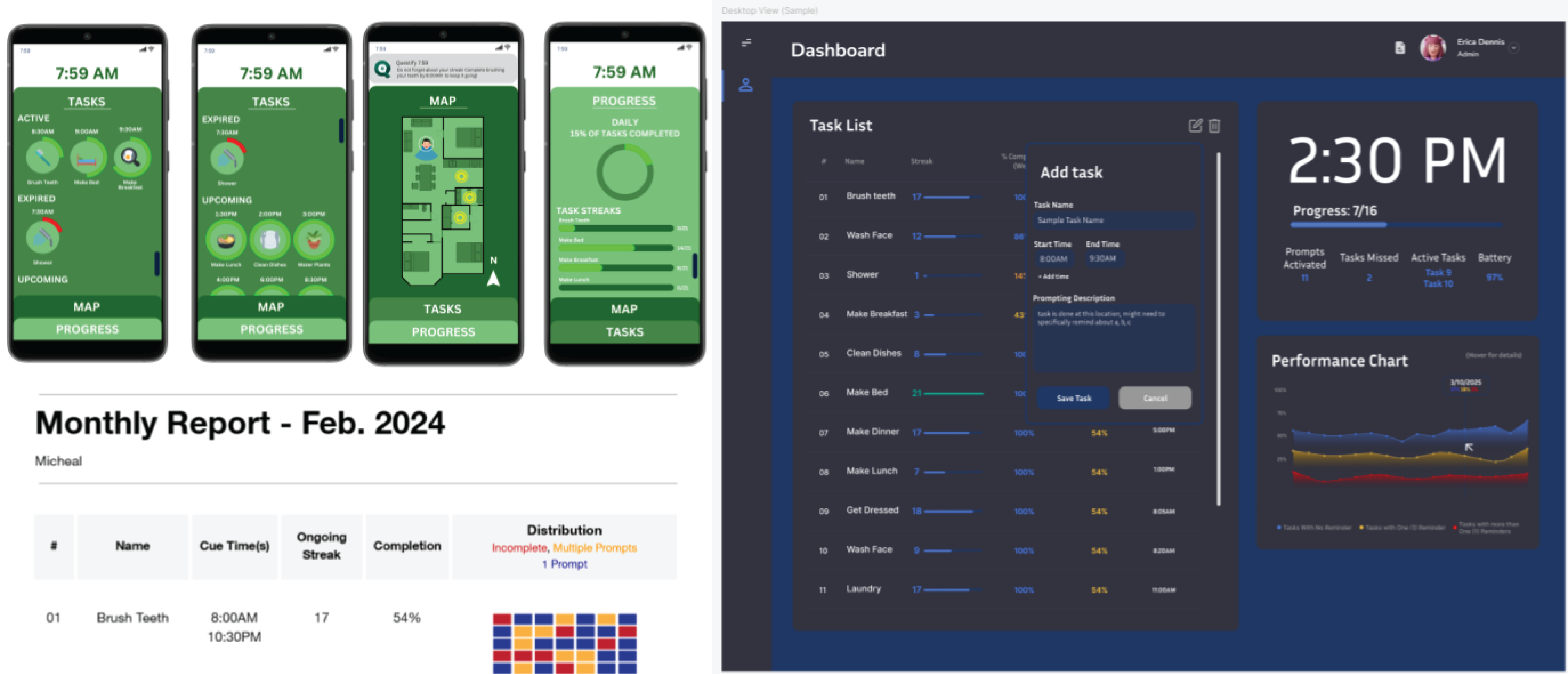
Multiple user interfaces for our chosen conceptual design. Used to demonstrate the idea and possible interface options to client
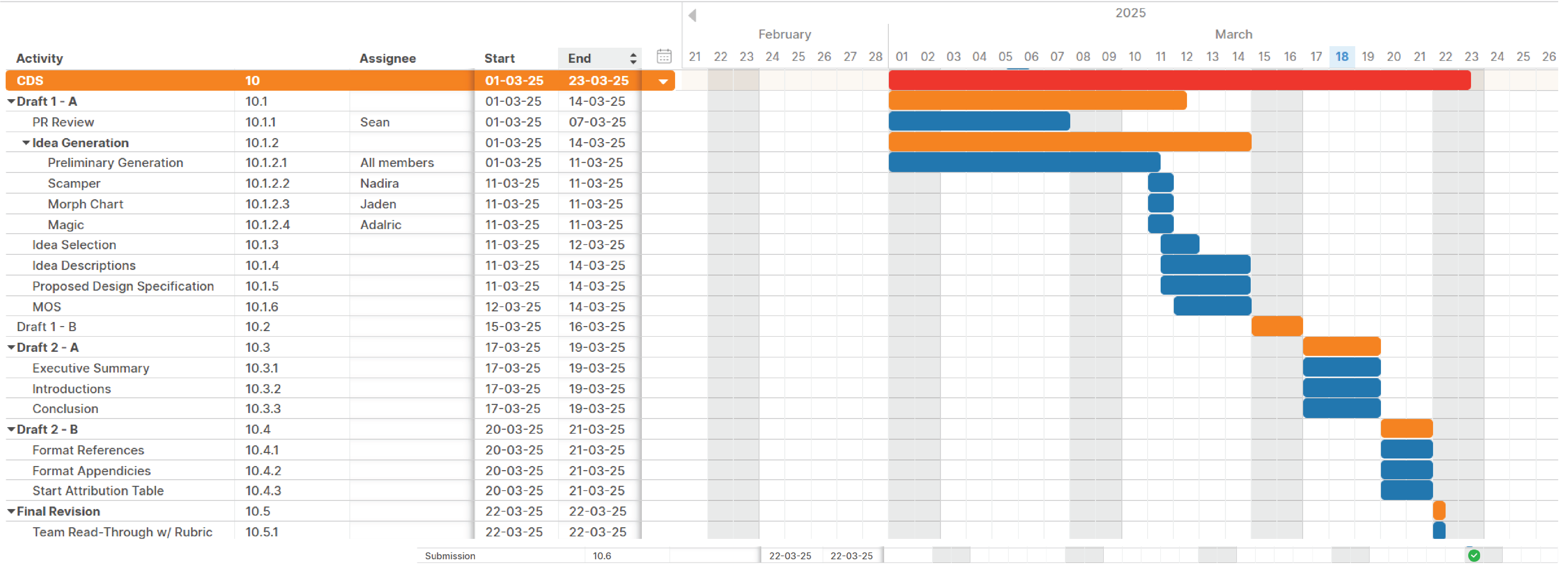
Gantt Chart used to more effetively organize teamwork in the context of a large project; updated each team meeting
Bahen Centre Courtyard Redesign
September 2024 - December 2024
With the removal of food options in south wing of Bahen Centre of Informational Technologies at the University of Toronto, the wing and courtyard adjacent to it becomes a large, open, but generally unoccupied space. The project of my first design course when studying engineering was to, in a group, redesign the arena to incentivize more utilization by students and act as a welcoming gathering space, with food options.
In collaboration with Adalric Tai, Maya Rak, Chloe Yeung, Jalilya Zhaxybayeva & Salma Elmalky. For APS111 - Engineering Strategies and Practices.
- Effective group work, with no predetermined team structure, to create a 50+ page polished Conceptual Design Specifications document, outlining and justifying a chosen design and a few alternates
- Engineering observation work to query the Service Environment and Scope of the design project to produce effective and specialized designs
- Analysis of building codes, fire safety guildlines, and other government documents to ensure complicity and safety for the public access area to be designed
- Collaboratively constructed a Team Charter document to sign on team guidelines, such as decision making and conflict resolution pipelines, to more concretely optimize teamwork
- Clear and technical language to formally document design choices and justification for effective future reference and knowledge transfer
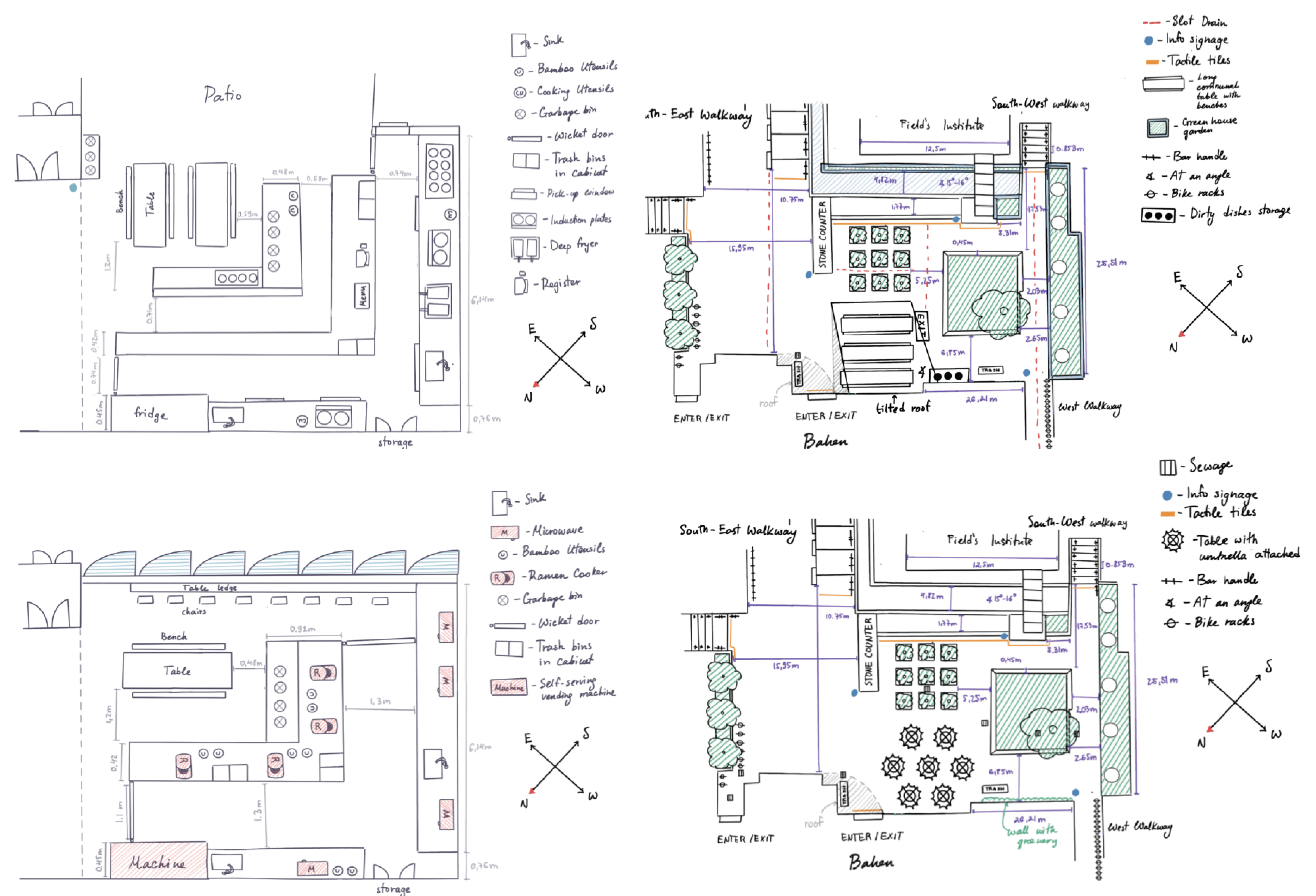
Birds-eye view of alternate and chosen designs (Art by Jalilya).
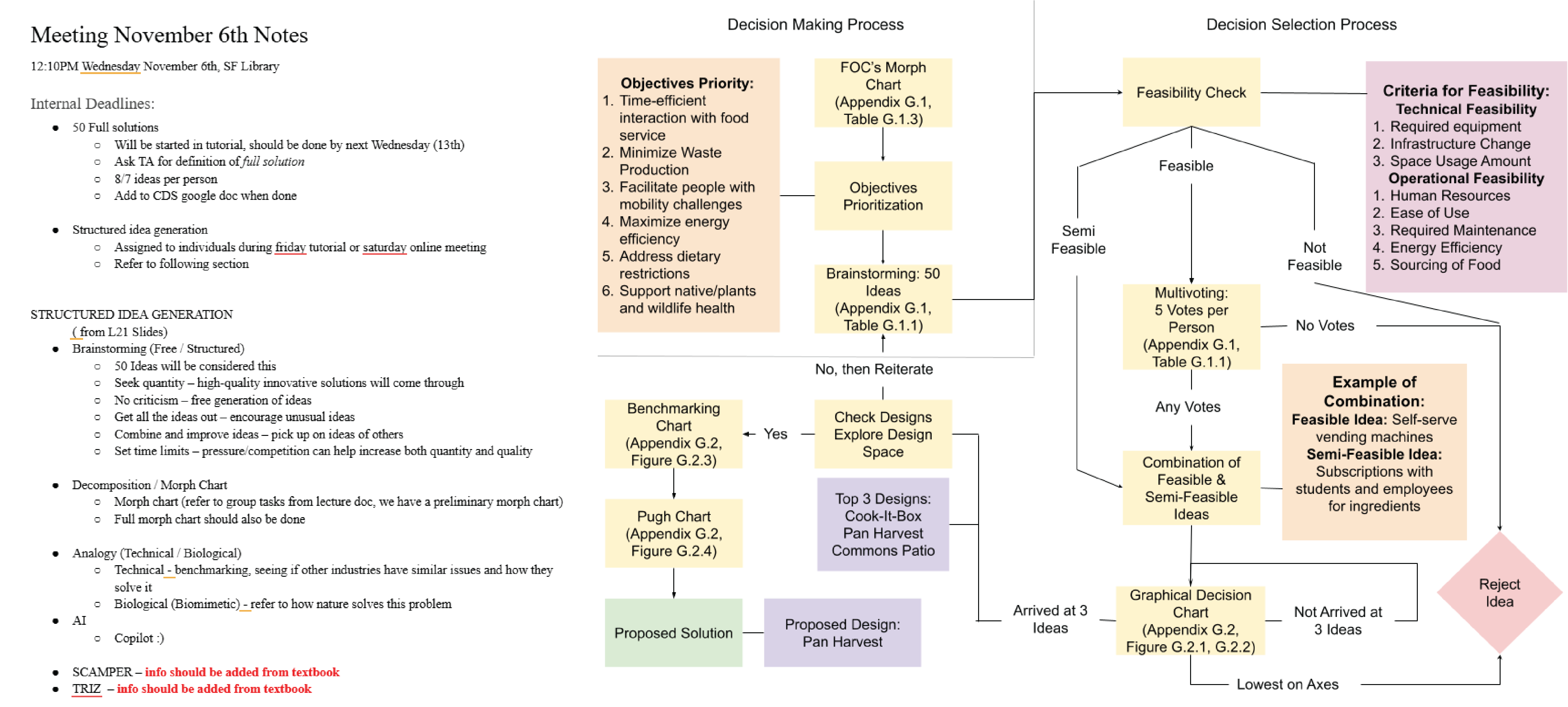
One set of meeting notes from a Nov. 6th team meeting (left), and the Decision Making Process flowchart for the Team Charter (right).